Loading ePaper

RISK-INFORMED DEVELOPMENT Why it matters.
This picture was taken after the landslide in Brazil in 2022. It shows the rescue work in a destroyed building. Oftentimes emergency response comes to mind when we talk about disasters. However, disaster risk management also addresses the recovery from, mitigation of and preparedness for an extreme event. In addition, it focuses on the prevention and reduction of risks in the pre-disaster phase. Risk-informed development: Why it matters. Over the past decade, disaster risks have become increasingly severe, exacerbated by the effects of climate change, resulting in more intense and frequent extreme events. Risks are increasingly complex and interconnected and can cascade across sectors, as exemplified by the COVID-19 pandemic. Inadequately planned urban devel- opment, environmental degradation, social inequality, and weak governance further exacerbate these risks to unprecedented levels. Although progress has been made in poverty reduction, disease control, and access to basic services, development gains remain fragile and are threatened by new and emerging risks, such as economic instability, terrorism, cyber fragility, and conflict. Drawing on disaster risk management (DRM), the guiding principle of risk-informed develop- ment (RID) calls for gathering as much infor- mation on risks as needed to make appropriate decisions, considering especially worst-case scenarios, with the goal of protecting and strengthening development against possible negative impacts. RID aims at preventing, mitigating, and preparing for risks, and focuses on understanding existing and future drivers of risk. This knowledge feeds into decision-making processes to reduce remaining risk levels and inform devel opment planning and investments. It is important to question and readjust development measures in light of the complex, interdependent and dynamic 2 IN A NUTSHELL
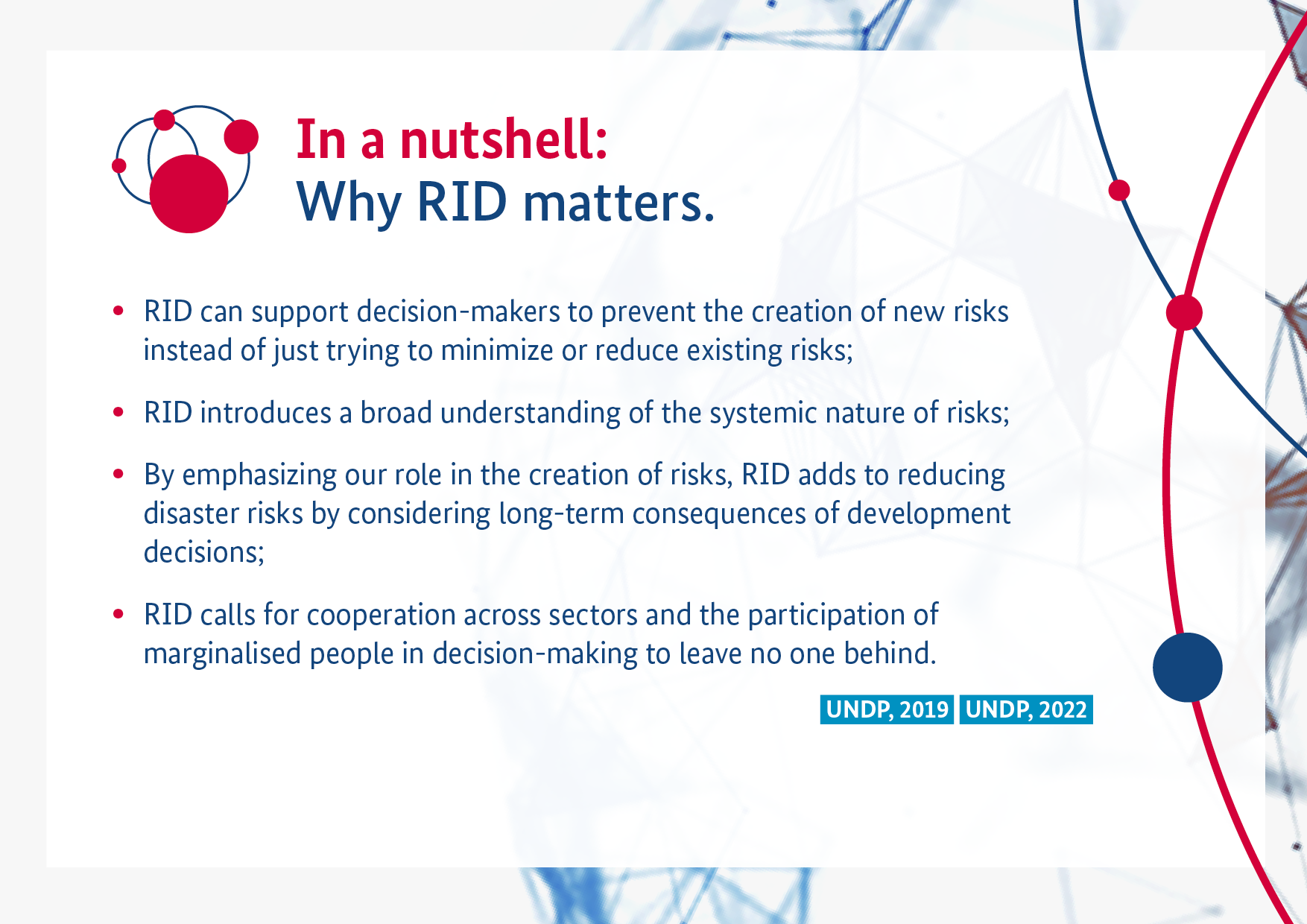
Risk-informed development | Why it matters. nature of risks. Risk-informed development is a to evacuate and as a last resort, you could move continuous process of addressing complexity and once risks become too high despite insurance never neglecting it. solutions. Based on data provided by climate projections to better understand possible sce- Adopting a RID perspective is crucial to safe- narios, decision- makers can strengthen risk-in- guard development gains, foster resilience, and formed land-use planning and prevent urban leave no one behind. expansion into high-risk areas. RID is an ongoing process that requires continuous RID aims to improve decision-making in all areas learning, adaptation, and innovation to minimize and sectors of development to consider existing potential impacts from risks and prevent potential and future risks. This emphasizes the importance losses and damages. RID does not only focus on of mainstreaming risk considerations into all current problems, but also aims to incorporate decision-making to contribute to RID, as it offers future challenges. For example, imagine living great opportunities for improving development close to a river: With heavy rainfall occurring more outcomes and building resilience in a rapidly frequently due to climate change, it may become changing world. By working together across apparent that your home was built too close sectors and adopting a risk- informed approach to the water and will most likely be damaged by to development, we can achieve a more sustain- recurring floods. There are construction options able and resilient future for all society. to make your home more resilient to flooding, UNDP, 2019 UNDP, 2022 early-warning systems could inform you in advance 3
Transforming development to minimise risk creation 1 What is risk-informed development? 1.1 What is a risk? 1.2 Enabling environment for RID 1.3 Critical infrastructure 1.4 Applying an inter sectional lens in RID 1.5 Risk governance in fragile contexts 2 Case studies: Risk-informed development in the context of … 2.1 Public investment 2.4 Colombia 2.2 Health infrastructure 2.5 Georgia 2.3 Urban development 2.6 Lesotho 4
6
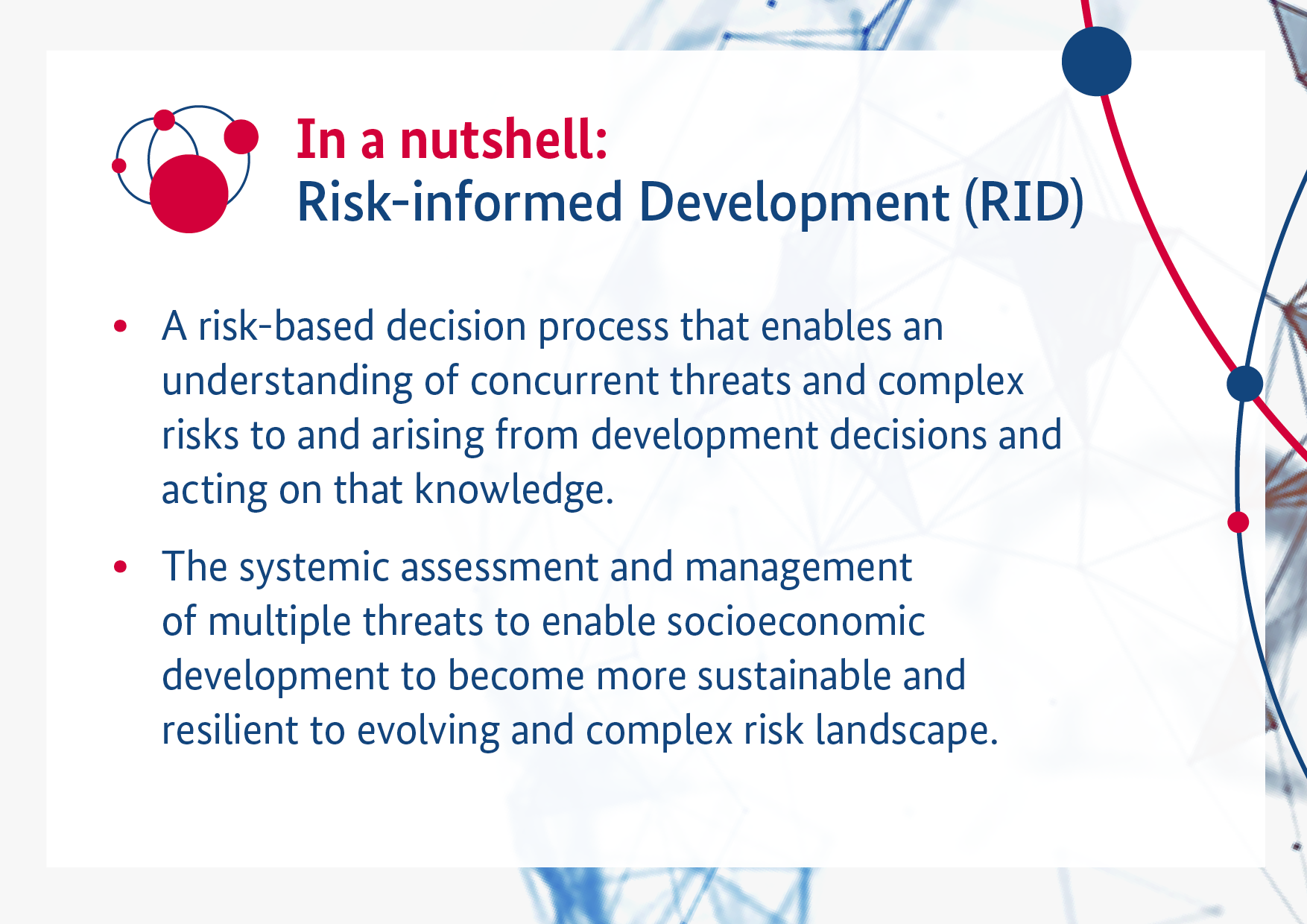
1. What is risk-informed development? We are facing increasingly complex, inter connected, and unpredictable risks — jeopard izing people, communities, infrastructure, and societies worldwide. Actively managing risks contributes to minimizing the potential loss of life, injury, and destroyed or damaged assets. Current disaster risk reduction (DRR) and climate change adaptation (CCA) mainstreaming approaches are limited in addressing these risks, e.g. only responding to acute risks or dealing with them in isolation. Despite inter national commitments to foster resilience and make development achievements as sustainable as possible, current development pathways and investments fall short of changing the way we manage risks or can even contradict each other UNDRR, 2022 . Originating from the field of DRR, riskinformed development emphasises our role in risk creation and expands the understanding of risks to include multiple concurrent and ever more systemic risks emerging from not only natural, but also humanmade and hybrid hazards. The RID approach integrates a broad understanding of risks linked to climate, health, economy, envi ronment, and various other fields. Addressing the systemic and inter connected nature of risks, RID is an interdisciplinary, strategic, and flexible guiding principle for decision-making towards a more resilient and sustainable development progress. RID recognizes that risks are influenced by our activities and choices, particularly, in inter national cooperation. ODI, 2022 UNDP, 2019 UNDP, 2022 RID emphasizes risks to development, but also the role of development choices as a source of risk creation. By addressing systematic risks in all fields instead of only in DRR or CCA action, RID describes a shift in mindset – across sectors, institutional levels, and stakeholders – from managing single hazards towards incorporating multihazards as well as existing and future risks into all development processes from the outset. RID is primarily a governance process prioritizing the consideration of risks in all development policy, planning, decisionmaking, and budgeting. With the RID approach as a guiding principle, decisionmakers need a variety of strategies, tools, and methodologies to understand the risks faced when entering a certain development trajectory. Depending on the country or regional context and the opportunities in the respective political economy, the range of strategies and approaches supporting RID is evolving. The devel opment of innovative and integrated solutions to global challenges such as climate change can contribute to more riskinformed decision making. RID draws on, for instance, • building capacities in risk awareness, risk management and governance via trainings; • facilitating and financing comprehensive risk assessments; • ensuring participation and community driven policymaking and implementation; • promoting riskinformed investments and financial solutions to reduce risks, such as local budget planning 8
Risk-Informed Development Risk-informed decision-making to safeguard development Disaster Risk Reduction (DRR) & Climate Change Adaptation (CCA) Human- Made Hazards Financial Instability Natural Hazards Hybrid Hazards Volcanic eruption Pandemic Drought Terrorism and Organised crime Nuclear / Chemical Warfare Earthquake Flood Tsunami While addressing (multi-)hazards, as well as exposure, vulnerability and coping capacities of individuals, communities and infrastructure, RID acknowledges the role of development decisions in the creation of risks and considers known and unknown complex, interconnected, and systemic risks. Drawing on DRR and CCA, RID describes a paradigm shift towards recognising our role in risk creation. Considering multiple risks in decision-making IN A NUTSHELL 9
Comprehensive assessments and analyses help us to understand risks. 10
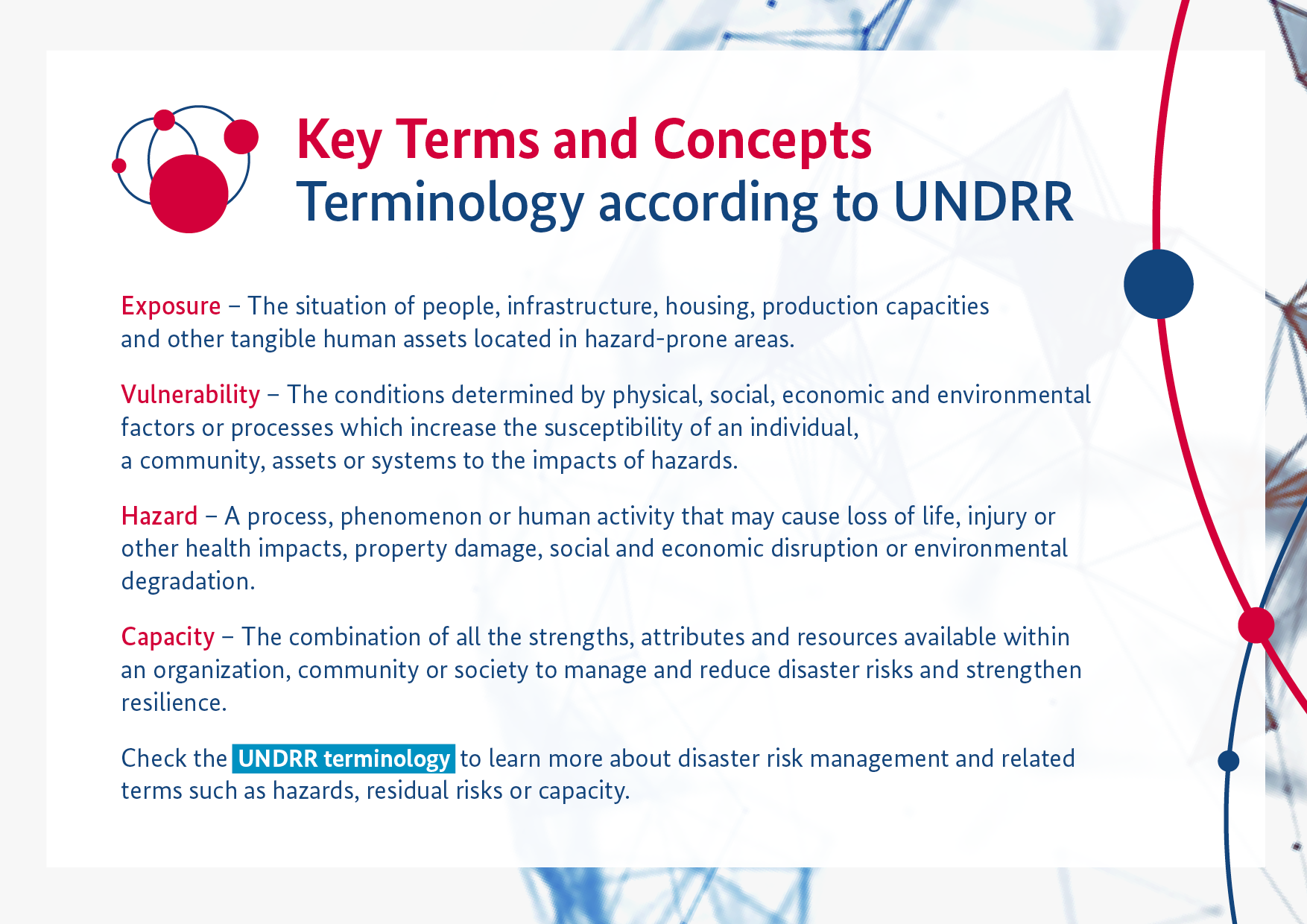
Risk-informed development | Why it matters. 1.1 What is a risk? Risk and disaster risk are often used interchange- ably, referring to the potential of a hazard to turn into a disaster with serious social, economic, and environmental consequences. Risk is determined as a function of hazard, exposure, vulnerability and capacity, i.e. created from the interaction between an extreme hazardous event and a vulnerable and exposed population, ecosystem, or infra structure. Risk does not only depend on how significant the hazard is, but also on a population’s or a community’s vulnerabilities, exposure and capacities. Risks are exacerbated by risk drivers, such as unplanned urbanization, environmental degra- dation, (gender) inequality, fragility, conflict, human mobility, and intensified by climate change. The risks that are being created are increasingly systemic and cascading across social, economic, and environmental systems, as the COVID-19 pandemic demonstrated. How can we reduce risk and what is resilience? Building capacities enables a system to reduce the risk posed by a certain hazard, adding to the resilience of people, infrastructure and the system as such. Resilience describes the ability of a community or environment to prevent, resist, absorb, transform and recover from the negative impacts of extreme events. Strength- ening the capacity of people and institutions to cope with and adapt to the adverse impacts of extreme events reduces their vulnerability. Although (natural) hazards cannot be fully prevented, it is possible to directly influence the disaster risk and reduce it to an acceptable level. This can be achieved by strengthening capacities for adaptation and coping, and by reducing vulnerability and exposure. BMZ, 2022 KEY TERMS Hazard Exposure Vulnerability Disaster Risk Capacity 11
1.2 Enabling environment for RID The Enabling Environment for risk-informed development (EE4RID) is defined as the conditions needed to ensure that risks can be integrated and considered in a wide range of development process and decision-making processes. It comprises a complex web of policy and planning instruments, institutional arrangements, stakeholders and activities that are interconnected and can be mutually reinforcing UNDP, 2019 . The EE4RID describes a set of policy, regulatory, organisational, procedural and cultural conditions that can institutionalise risk within development decision- making processes UNDP, 2022 . The EE4RID represents the broader system within which indi viduals and organisations function. In order for change to occur, a whole-of-society approach is required (from national to local level) whereby changes in institutional policy and legislation have to co-evolve with changes in societal norms, values and individual behaviours. From this synthesis, the core elements or dimensions of an EE4RID were identified (see figure below). After identifying gaps or insufficiencies in the EE4RID in a specific context, these can be taken up by development decision makers and stake- holders as entry points to develop solutions and build capacities accordingly. Organisational Arrangements Policy & Regulation Partnership & Collaboration People, Culture & Environment Finance & Resources Knowledge & Information
Risk-informed development | Why it matters. Compounded by climate change, Lesotho is expected to be pushed into a period of water stress by 2030. 13
In general, an Enabling Environment for RID re- the subnational level i.e. closest to the point of quires a combination of top-down actions that implementation of development interventions. In provide political commitment and guidance for a turn, this will require robust and sustained link- risk- informed approach, together with bottom-up ages to be established between local and national actions that increase risk understanding and risk levels, involving the vertical and horizontal governance capabilities of relevant actors at coordination of multiple stakeholders. Dimensions and sub-categories of the En Finance & Resources • internal budgets • external finance • • risk transfers • grant / lending criteria • procurement systems local resources leadership and vision legislation and institutions Policy & Regulation • • • policies, strategies, and plans • codes, standards, tools and guidance, good practice Organisational Arrangements • risk management tools • coordination • organisational capacity • roles and responsibilities • monitoring and evaluation 14
Risk-informed development | Why it matters. For the six dimensions of the EE4RID, several sub-categories and indicators were identified to allow for a context-specific analyses (see below). The EE4RID is an evolving analytical framework that facilitates the analysis of possible entry points for action and needs to be adapted to the country or regional context at hand. he Enabling Environment for RID People, Culture & Environment • risk perception and tolerance • gender and equity • customs and culture • whole-of-society approach and inclusion of at-risk communities • ecosystem services and nature-based solutions Partnership & Collaboration • multistakeholder partnership and international cooperation • cross-sector and inter-agency collaboration and coalition Knowledge & Information • risk assessment and analyses • systemic risk knowledge • system-wide views • risk communications • diverse knowledge, science and technologies • education and training 15
1.3 Critical infrastructure Societies worldwide depend on functioning infrastructure services, such as water, electricity, or telecommunication, which also facilitate the operation of the critical systems, such as transport and health systems. Such infrastruc- tures are referred to as critical infrastructures (CI), as they are considered system-relevant and essential for the functioning of a society. Governance Transport & Traffic Water Energy Food Finance Health IT & Tele communication Media & Culture The term critical infrastructure refers to physical structures (e.g., roads, internet, hospitals, power lines, water, and sewage network) and services provided (e.g., supermarkets, transportation, medical treatment), including the skilled work- ers required for these services. These complex and interconnected systems have become so ubiquitous and essential to day-to-day life that they are easily taken for granted. Our depend- ence on these systems is oftentimes disregard- ed until the services provided by such infra- structure are interrupted, for example, when we lose access to electricity, transportation, or wa- ter due to a severe storm or flooding. Generally, whenever critical infrastructure is disrupted or damaged, it considerably impacts a large part of the population, the economy, and the state. Critical infrastructures are characterized by a high degree of interdependence, which means that the impairment or failure of a single critical infrastructure can affect systems within the sector or spread to other sectors. The health sector, for example, relies heavily on the smooth supply of water and electricity, the transport sector on the provision of fuel and road accessibility, meanwhile the food industry depends on the transport and water availability. By “spilling-over” into another sector, any set- back or failure in one of these infrastructure systems can detrimentally affect public admin- istration, economic activities, reliability of supply, the welfare of communities, and public health, among others. Due to the changing risk landscape, major disruptions can occur even in countries with exceptionally reliable infrastructure systems. Additionally, the resilience and vulnerability of individuals and communities against disruption varies — for marginalized and dis advantaged parts of the population, a disruption of basic services might result in more severe social or economic repercussions. As the failure of critical infrastructure disproportionately affects more vulnerable people, it is also crucial to consider the needs of different population groups when strengthening critical infrastructure resilience. BBK, 2023 Promoting resilient critical infrastructure for risk-informed and sustainable development 16
Cascading risks and spillovers One hazard can create high disaster risk if people and infrastructure are exposed and vulnerable. One hazard can trigger another, for instance, underwater earthquakes can cause a tsunami. If a risk leads to infra- structure disruption or failure, this can cascade into other critical infra- structure sectors, leading to more disruption and failures. Critical infrastructure Vulnerabillity Exposure Tsunami Earthquake 17
1.4 Applying an inter sectional lens to RID Disasters have the potential to create or reinforce existing (gender) inequalities, discrimination, and social exclusion. This can manifest in limited access to information, risk communication, resources or suitable trans port and thus lower the ability to adequately prepare for and respond to a hazard or disaster. After the cyclone Gorky in Bangladesh in 1991, for instance, 14 times more deaths were recorded among women than men. As a consequence, the country tackled the underrepresentation of women in disaster risk management (DRM): Women were trained to become community mobilizers and transmitters of early warnings, and cyclone shelters were adapted to their needs. The positive impact of this shift was evident when hurricane Sidr hit the coast of Bangladesh in 2007, as the disaggregated mortality rate dropped to five women for every man. This example of shifting the perception of women towards becoming agents of change shows how following a more inclusive approach to capacity building can reduce risks and, thereby, the negative impacts of disasters. Addressing risks has to go beyond the field of DRM and take a more holistic approach, framed under the concept of risk- informed develop- ment. Likewise, there has been a shift in gender equality policy from a pre dominantly women- centered to an inter sectional approach. Such an intersectional approach provides an analytical tool to enable a more nuanced understanding of people’s needs, interests, capacities, and experiences. To that end, we need to continuously apply an intersectional lens to development decision- making across all sectors. This means to consider ways in which social categories and power dynamics influence risks in context-specific settings. To strengthen resilience, we need to understand and include both inequality aspects and a shifting risk landscape, to tailor policies, projects, and interventions. Becoming more risk-informed is an intricate task, as hazards and risks are subject to the setting and ever changing. Accordingly, vulnerability, coping capacities, and resilience of individuals, groups, and com- munities vary, with root causes in the social systems and power structures. An additional challenge is the lack of disaggregated data, leading to the invisibility of minorities, vulnera- ble and marginalized groups in risk and disaster data, models, and analyses. For example, in the main database for disaster losses, DesInventar, only 13 of 85 reporting countries register disag- gregated data by gender or age. Disaggregated data allows for more tailored interventions that are closely aligned with needs and local condi- tions but also consider existing power structures and role perceptions, following the do-no-harm approach and the leave-no-one-behind (LNOB) principle. 18
Risk-informed development | Why it matters. Strengthening risk-informed development is a intersections is critical to reducing disaster risk governance effort at heart, as risk itself cannot and foster risk-informed development. be separated from the complex power dynamics We need better data and comprehensive and in place. Moreover, resilience relies on equal inclusive measures that address these inter- access to information, resources, and partici- sections and ensure that existing inequalities pation. Therefore, risk governance needs to be: and vulnerabilities are not exacerbated. 1 2 3 based on a common understanding guiding principle can provide a foundation for of the systemic nature of risks, transformative, needs-based action to reduce Overall, the risk-informed development as a differential impact, leaving no one behind. tailored to the setting, for instance, community-specific needs and capacities, and Definition: carried out by a cross-sectoral are shaped by their identities, relationships, and multi- level alliance of actors, and social factors. These combine to create which requires time, resources, and intersecting forms of privilege and oppression Intersectionality “recognises that people’s lives political commitment. depending on a person’s context and existing power structures such as patriarchy, ableism, Understanding the impact of norms, roles and colonialism, imperialism, homophobia, and socio-cultural and economic factors within racism.” UN Women, 2021 a given culture and society, as well as their 19
Entry points for applying an inter sectional lens to risk-informed development: Allow for contextual complexity • Refrain from simplifying a context. Acknowledge the complexity. Avoid generalizations — recognise intra- group difference in terms of risk exposure and that communities are neither homogenous nor static. Find measures to ensure the involvement of individuals and groups who are in particularly vulnerable situations. • Favour tailored solutions – not the quickest ones. Try to identify opportunities to include RID measures. • Raise awareness that risk is systemic and that if intersectionality and (gender) inequality are not addressed, vulnerabilities will increase. Relevant data is key • Find, collect, and share as much disaggregated data about the context as possible, to track existing social inequalities, risks and intersecting modes of discrimination that include categories such as gender, age, disability, income, ethnicity, etc. You don’t have to reinvent the wheel here — use existing data or analyses on inequality to facilitate finding entry points. • Design and share data collections and databases that are accessible, practical, and user- friendly. • Conduct qualitative interviews and multistakeholder dialogues to complement quantitative analyses. Build bridges and use synergy effects • Broaden your project horizon and prioritise collaboration internally: Align action to target intersectional inequalities. • Identify entry points or gaps in existing programming with partners. Be “opportunistic” – identify low hanging fruits, i.e., sectors or topics where partner organisations are willing and eager to pilot an intersectional approach. • Allow for and empower a wide and continued participation of civil society. Ensure that the community addressed and those in vulnerable situations are involved in decision-making processes, which deal with risks, including those related to intersectionality. • Include trusted stakeholders and gatekeepers as allies, who know the local settings and can advocate better in the communities. • Monitor how power structures and intersectional categories in a context change depending on stressors, such as climate change, fragility, or disaster impacts. 20
Risk-informed development | Why it matters. 1.5 Risk governance in fragile contexts Considering the complexity of risks and impacts in fragile environments, a funda mental under- standing of risk must be achieved. However, the relation between conflict, fragility and hazards remains under-researched UNDP, 2019 . The risk governance approach is guided by the Leave-no-one-behind (LNOB) principle. In fragile contexts especially, people facing multiple discrimination are exposed to complex risks and tend to be particularly affected by the impact of extreme events and disasters. Unequal access to services, civil society structures, social security systems and political participation, leave those most at risk exposed to the impacts of disasters. At the same time, disaster impacts exacerbate inequalities UNDRR, 2023 . In line with the LNOB principle, development, humanitarian, and peace approaches have What is risk governance? gradually recognized the complex realities of the people that development activities intend to support. Multi-risk contexts increase the institu- tional and organizational challenges of risk governance. Effective disaster risk reduction and management rely on functioning governmental and administrative structures to safeguard people and ensure resilient infrastructure, but these structures are oftentimes insufficient in fragile or conflict contexts. The transition to a more systemic risk manage- ment in fragile contexts requires further devel- opment of personal and institutional capacity, better risk diagnostic tools, and operational approaches. This must be matched by mandates that can break down siloed approaches to decision making UNDP, 2019 . Risk governance integrates short- and long-term risks into all decision making and management processes, as well as state initiatives. A comprehensive risk assessment records the vulnerabilities and coping capacities of individuals and systems, which can vary greatly depending on social norms, gender roles and structural power dynamics. Measures for strengthening risk governance include considering climate and disaster risks in land-use, urban and budgetary planning, conducting comprehensive risk analyses for investment projects, and implementing safety standards in schools and critical infrastructures, such as hospitals and transporta- tion systems. Risk governance must thus inform all critical infrastructure sectors and all development decision-making processes on an ongoing basis. To this end, it is necessary to elaborate (worst-case) scenarios, take account of a complex and changing risk landscape at all times, factor in uncertainties and design development processes to be correspondingly flexible. This requires coordinated, multi-level cooperation across ministries and sectors as well as the empowerment of local structures, civil society organisations and other relevant actors to enhance partipatory processes. 21
Case studies 2 The Global Initiative on Disaster Risk Management (GIDRM) commissioned by the Federal Ministry for Economic Cooperation and Development (BMZ) and implemented by GIZ, aims at strengthening capacities and skills in risk-informed decision-making to safeguard development achievements worldwide. In its third phase (2020 – 2023), GIDRM worked with three regional networks and organisations as well as selected member states to strengthen capacities in assessing and managing multiple, systemic, and unknown risks. GIDRM III cooperated with regional organisations and other partner institutions to pool and transfer knowledge on risk-informed development between a large number of state, civil-society, and private-sector decision-makers and experts from the scientific and research communities and develop a common and comprehensive understanding of risks to strengthen risk- informed development. In the scope of its third phase, GIDRM supported partners in fostering RID in the fields of public investment, health infrastructure, urban developent, as well as the country-contexts of Colombia, Georgia and Lesotho. More information on www.gidrm.net 22
Risk-informed development | Why it matters. 23
Risk-informed public investment Public investment projects aim to promote and facilitate capacities (human capital development, innovation, research, etc.) and resilient infrastructure (roads, public buildings, bridges, etc.) to support the production, access and distribution of goods and services and contribute to a country’s development. Disruptions in basic services and infrastructure due to hazards or disasters have long-term impacts on economic development. Apart from direct expenditures for emergency relief, rehabilitation, reconstruction and the provision of alternative services, economic growth often drops in the wake of large-scale extreme events. If climate and disaster risks are not sufficiently considered, public investment projects might not be sustainable in the face of existing and future risks. Risk-informed public investment assesses the extent to which an infrastructure or a service is at risk. Based on multi- sectoral cooperation, this approach strives towards including possible known and unknown risks in decision-making around public investments. All activities associated with reducing any type of risk in an investment project represent costs and benefits, which must be identified, measured, and valued. In Latin America, GIDRM III cooperated with the Latin American Network of National Public Investment Systems (Red SNIP) and ICAP to ensure more risk-informed public investment. Red SNIP ICAP Public investments in the context of COVID-19 recovery: The pandemic had a global impact, disrupting basic services and access to critical infrastructure causing health and economic crises in many regions. It uncov- ered the interdependencies between sectors and the challenges of cascading risks, pushing governments to take action towards more risk-informed public invest- ment. National governments worldwide have been working towards strengthening guidelines for investment project identification, formulation and evaluation to improve resource allocation and incorporate disaster risk management (DRM) and climate change adaptation (CCA). COVID-19 response measures in forms of public investments by the SNIPs were vital to stabilise the economic situation in many countries in the region. Besides budget amendments, many countries made structural changes to public investments structures and processes in response to COVID-19 by modifying the components of their national public investment systems: regulatory frameworks, human resources, training, methodologies, processes and procedures, project data and information systems for project management as well as sources of financing. 24
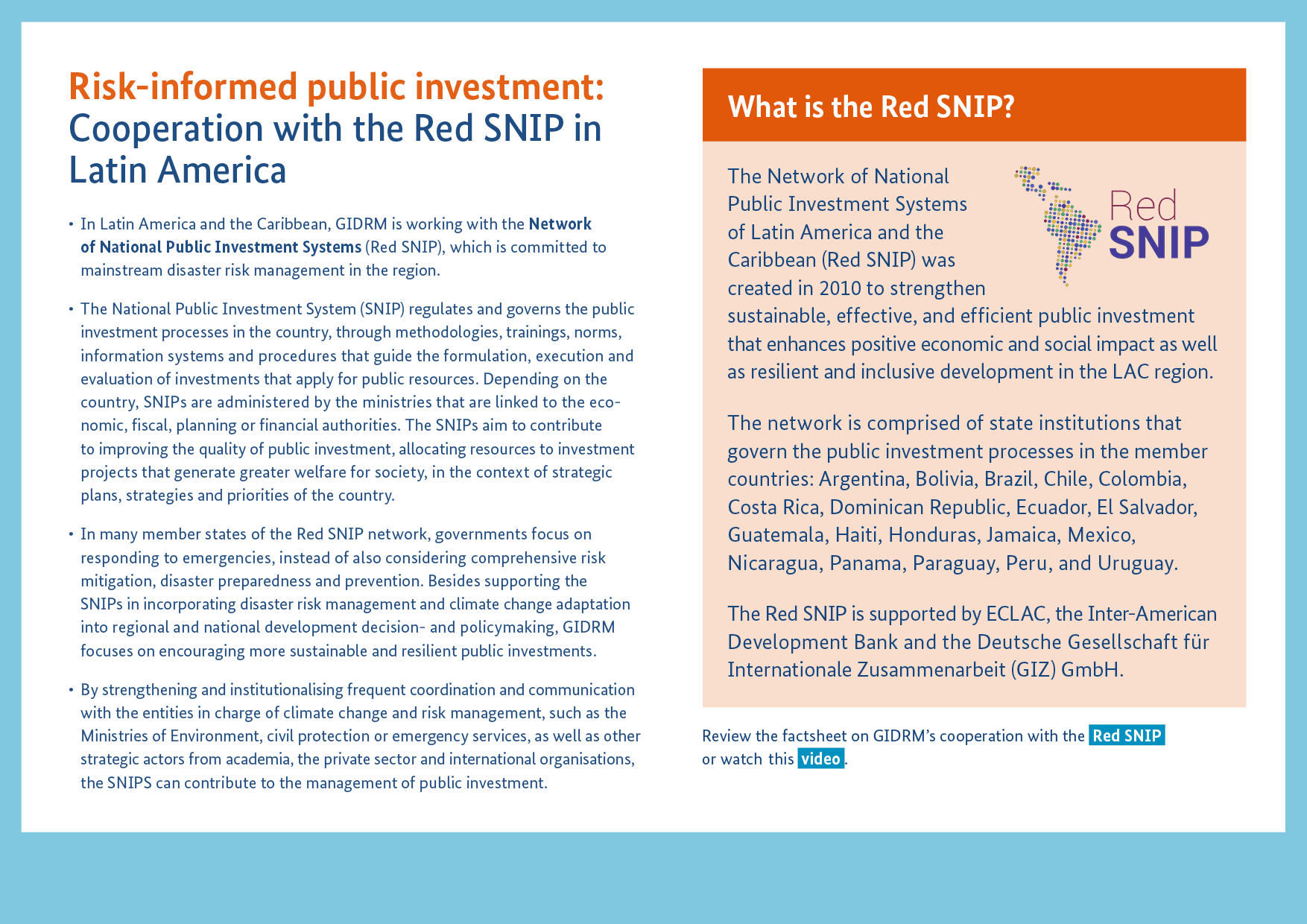
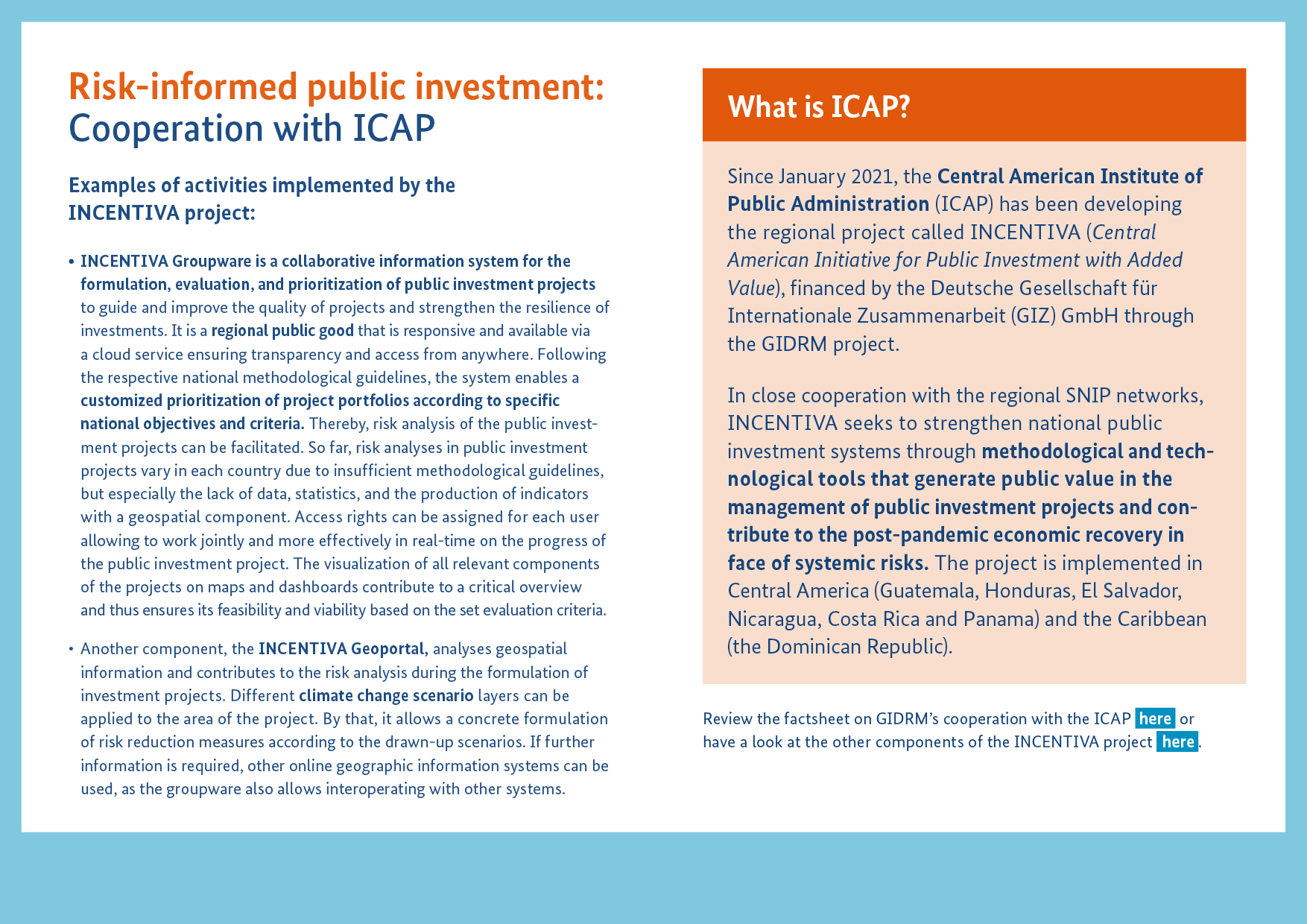
Prospective management in the pre-investment phase Intervene on risks that do not exist yet, particularly, in risk-prone areas. Prospective risk management intervenes on future risk in new investment projects: • during the formulation of public investment projects • via territorial planning instruments • with standards and regulations P R E - INVESTMEN T P H Strategic planning A S E n o i t a u l a v E d e s i g n I n v e s t m e n t Implementation & Monitoring 1. Identification • Conduct disaster and climate risk analysis • Determine loss and damage • Find risk-informed solutions 2. Formulation • Technical analysis of risk-informed solutions • Efficient and effective budgeting 3. Evaluation • Check social value of (co-) benefits • Evaluation of DRM and CCA measures • Raise awareness for different scenarios Reactive management in the investment and operation phase Intervene on the risk that has not been corrected yet or on the residual risk Reactive risk management intervenes on residual risk through: • Early warning • Insurance solutions systems • Emergency planning • Simulations and capacity building exercises Corrective management in the investment and operation phase Intervene on existing risks Corrective risk management intervenes on existing risk in existing investment projects: • Protection of systems • Risk transfer • Incorporating risk reduction measures in public investment projects • Reinforcement of con structions POSTER DOWNLOAD 25
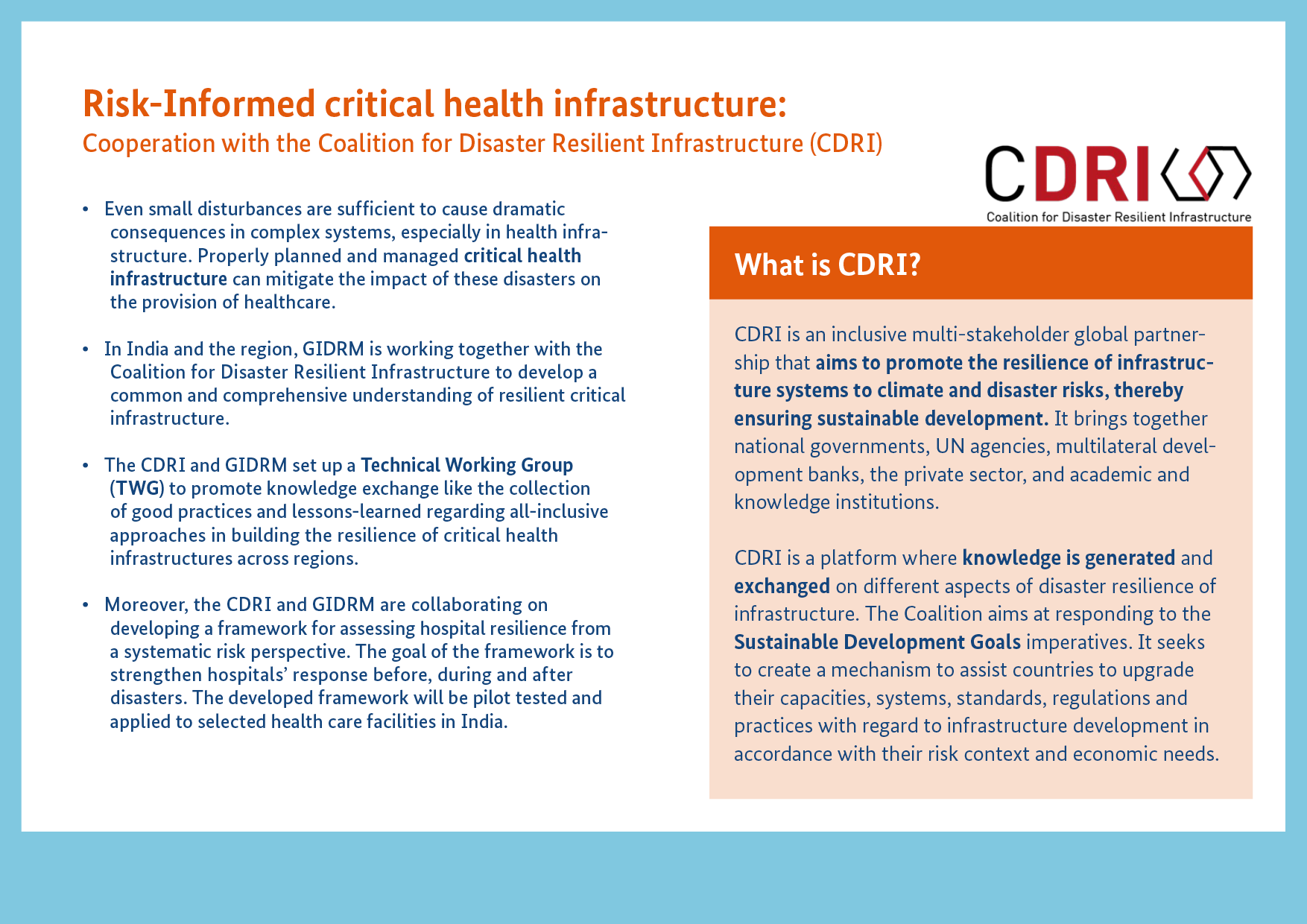
Risk-informed Critical Health Infrastructure Health is one of the critical infrastructure sectors. Equitable access to healthcare services still represents an unattained goal in many contexts. Critical health infrastructure entails a series of sub- sectors providing health services. Maintaining basic healthcare functions and health services in times of crisis relies on resilient critical health infrastructure, but also on the functioning of other critical infrastructure services. Critical infrastructure sectors are interconnected, often resulting in cascading effects in case of disruptions, interventions and failures (see figure below). What is infrastructure resilience? The timely and efficient prevention, absorption, recovery, adaptation and transformation of national infrastructure’s essential structures and functions, which have been exposed to current and potential future hazards. Example of cascading risks Floods can damage road networks making them inaccessible in the aftermath. In turn, this disruption of transport routes can pose challenges for healthcare facilities to obtain essential medical supplies or to reach people in need. Transportation Road network Extinguishing water supply Shocks and stressors Emergency Services Patient transport Medical Care Communication technologies Medication and Vaccines Critical Laboratories Health Services and Facilities Civil Protection Rescue Services Alarm systems Fuel and power supply Large-scale events such as the COVID-19 pandemic highlight how shocks and stressors can affect critical health infrastructure. Water supply Energy Drinking water supply + waste water disposal Heating, ventilation + air conditioning 26
Example: Hospital Resilience Assessment Framework In order to guide hospitals in identifying potential entry points for improvement, the Coalition on Disaster Resilient Infrastructure (CDRI) and GIDRM collaborated to develop a Hospital Resilience Assessment Framework, with the technical support of Risklayer GmbH. The framework is being piloted in India, as part of the “Resilient Health Infrastructure for Sikkim” Initiative. After its pilot phase in India, the framework can be replicated in other contexts. It has three compo- nents: The building and the system components address the physical aspects of a hospital (such as hospital equipment and the hospital building itself), while the management component focuses on the organizational processes and protocols (such as the evacuation plans). CDRI 1. Identification and analysis 2. Development 3. Application of existing frameworks for the hospital resilience assessment from a systemic perspective of a framework for assessing the resilience of health-care facilities from a systemic perspective of the assessment framework to selected health care facilities in India Goal: Strengthening hospitals to respond effectively before, during and after disasters. Hospital Resilience Framework Multiple Hazards Quantitative Indicators Hospital Resilience (HR) • Site/Building • Systems • Management Community Resilience (CR) • Disaster Impact • Social Vulnerability • Coping Capacities Qualitative Indicators Institutional Resilience (Capacities, Policies and Interventions) • Risk Governance • Emergency Management • Public Health Services 27 Integrated Hospital Resilience Index (IHR) Hospitals that apply the Hospital Resilience Assessment Framework are able to quantify their current level of resilience based on their own data input as well as in combi- nation with globally existing multi- hazard models to receive tailored recommendations for improvement and more risk-informed decision- making. POSTER DOWNLOAD
Risk-informed Urban Development (RIUD) Globally, over 56% of the population lives in urban areas. By 2050, this urban population is estimated to rise to 68% - 6 billion people. Increasing urbanization and population density, create challenges and growing needs for planned urban development, e.g., regarding resilient housing, access to basic services, transportation, health care or employment. Especially in combination with risk drivers (poverty, fragility, climate change, or weak governance), this urbanization trend can exacerbate risks and can create new risks. Planned urbanization contributes to value creation, sustainable growth, productivity, and economies of scale to create prosperity for all citizens. In face of current and future disaster risk, urban resilience is key, and it relies on risk-informed urban development (RIUD). RIUD Initative The Risk-informed Urban Development (RIUD) Initiative is carried out by GIDRM in cooperation with the Connective Cities – Community of Practice for Sustainable Urban Development (CC). The objectives of the Initiative are: • Facilitating peer-to-peer exchange and development of scalable and replicable solutions • Building up a network of cities and experts, addressing multi-actor, multilevel and cross-sectoral interdependencies 14 Countries 26 Cities 65 Representatives (national, local and municipal) 70k – 5,6 mil. Urban population • Strengthening risk governance and risk-informed development More information on the RIUD Initative Recommendations Enhance policy, legislation, institutional and organization- al setups with a RID focus Invest in capacity building, knowledge, and information management Strengthen regional and national urban planning for building resilience Disaster risk financing and socio-economic considerations Offer and promote durable solutions Strengthen multi-level, inter-country and inter-city cooperation 28
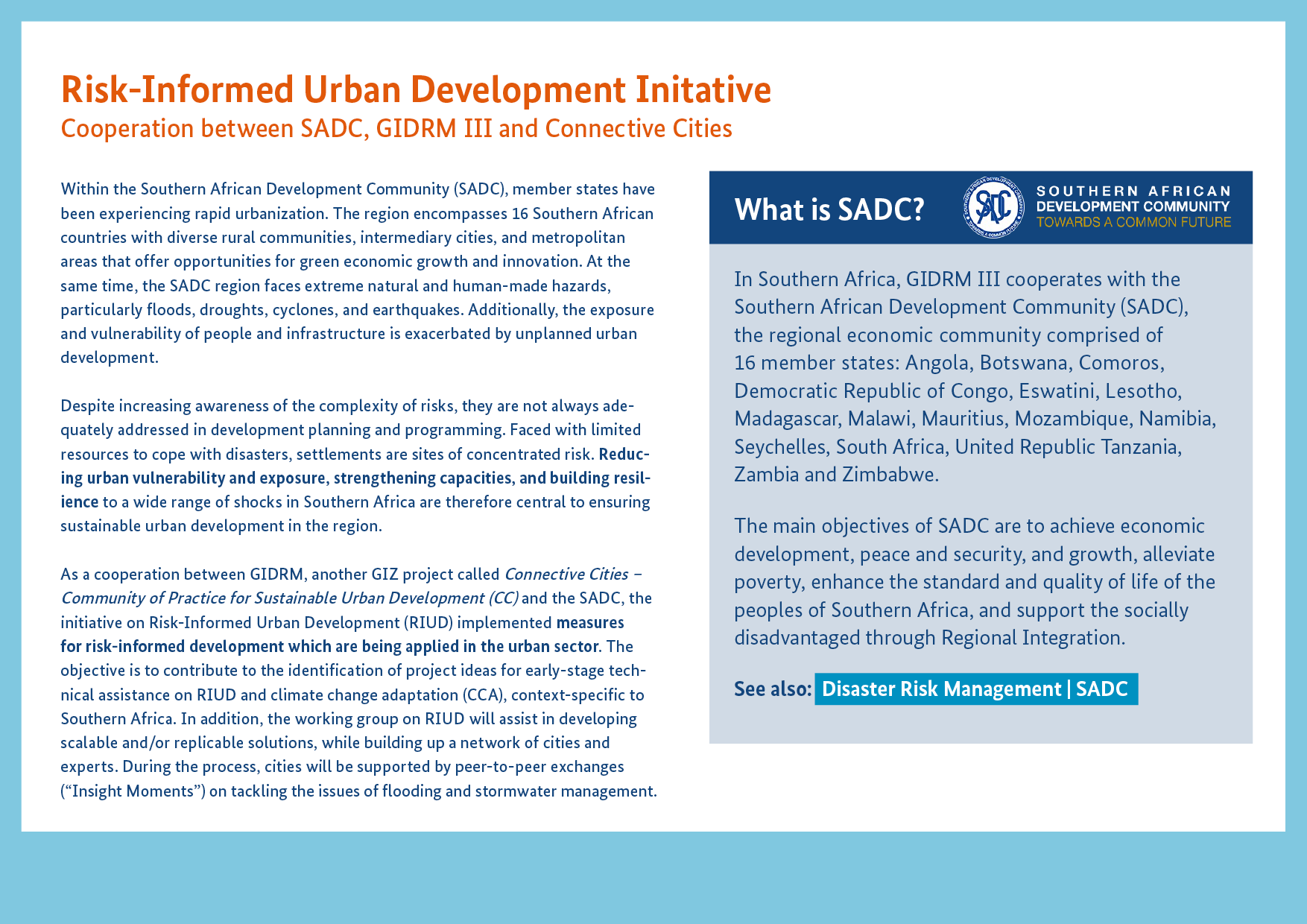
Risk-informed decision-making in cities Risk-informed decision-making considers and embraces multiple, concurrent sources of risk and their complex interactions. A good practice example of implementing RIUD in decision making is eThekwini, South Africa. The municipality is mainly threatened by frequent flooding leading to loss of life and infrastructure, as well as erosion, sea-level rise, (extra)tropical cyclones and others. By adopting the Transformative River Management Program (TRMP) as a holistic approach to DRR through ecological infrastructure restoration, eThekwini has increased its efforts on prevention and preparedness by adapting 7,400 km of streams and rivers to flooding, droughts and extreme weather events. Communication and iteration Transparent and effective communication between stakeholders, and iteration as needed, throughout the entire process 5 Specialized unit to interact with municipality, academia and disaster response teams 4 Partnering with NGOs, local communities and universities, to monitor progress and build an evidence base Monitoring and evaluation Monitor performance to determine what works well, what needs modifying and why, and whether the plan is implented effictively Options appraisal and implementation Evaluate and adjust development options based on the risk appraisal results, and implement accordingly 3 Cooperation with academia, local leaders and DRM units 2 Graduated risk assessment of informal settlements in flood-prone areas Risk appraisal Examine the influence of the potential development plans understand interconnected vulnerabilies, multiple threats, trade-offs and uncertainties 1 Recognizing actors and specific competencies + Closing institutional gaps Scoping Map out the decision context and frame the development decision(s) under consideration POSTER DOWNLOAD 29
How did the guide come about? Colombia How did the guide come about? How did the guide come about? How did the guide come about? What does it propose? Comprehensive risk assessment and planning in the context of climate change What does it propose? In Colombia, around 88% of all the occurred disasters over the past thirty years were weather-related events. Although Colombia has established a solid institutional and regulatory platform for disaster risk management (DRM) and climate change adaptation (CCA), efforts to promote risk-informed development need to be strengthened. In Colombia, GIDRM developed a concrete roadmap to guide the potential application and implementation of risk assessments in the context of climate change. The practitioner- oriented roadmap was jointly developed by Fondo Acción and GIDRM, based on the Technical Guidance on Comprehensiv Risk Assessment and Planning in the Context of Climate Change (TG) published by UNDRR. What does it propose? Stages of comprehensive risk assessment Scoping • Context • Objectives • Participation • Risk assessment criteria and methods Analysis • Underlying risk factors and climate change • Exposure • Vulnerability Identification • Relevant hazards, impacts and risks • Exposed elements • Values at stake Evaluation • Risk prioritisation • Identification and prioritisation of measures ati ards, n is isk fact • Cascading impacts on human is n and ecological systems uation ors oritisatio Cross-cutting aspects Implement gender and intersectional approaches Apply graduality and scalability criteria Sustainable Development Goals and other development agendas 30
Understanding and assessing risks The tool “Capacity-adjusted risk index”, developed by the Colombian National Planning Department (DNP) allows municipalities to be assessed and compared in terms of their population’s risk of being affected by floods, flash floods and land- slides, and their capacity to manage these risks. The map illustrates areas with higher (red) and lower (blue) risks, while considering existing coping and adaptive capacities. Understanding risks relies on (1) a comprehensive assessment and analysis of risks under the consid- eration of the guiding principles (illustrated below) and (2) the integration of the identified risks into planning and decision-making processes, especially regarding land use plans, to contribute to risk-informed development. Addressing risks: Guiding principles San Andrés Providencia Capacity-adjusted risk index 24.7 – 48.4 48.5 – 58.4 58.5 – 81.6 Reclassification according to natural breaks method 0 5 10 20 30 40 Km Data source: Capacity-adjusted risk index, DNP, 2019 Managing risks: Capacity building 1 2 3 Dissemination Coordination Transfer of the importance of implementing the Risk Management and Climate Change Policy between risk management and climate change of the use of impact chains as an option for the characterisation of risk scenarios in the adaptation, using multi- context of climate change, especially hazard approaches through participatory processes 31 POSTER DOWNLOAD How did the guide come about? What does it propose? 1 1 2 n is n ors n 3 h: 4 ion 5 3 7 9 2 6 4 8 10 Put human and Fully account for Recognise the Apply Strengthen risk Use multidisciplinary Use the Manage Integrate Use ecological systems the context of complex and inclusive communication, approaches concept of risks risk across iterative at the centre of climate change systemic nature risk information to identify risk through sectors and and flexible disaster risk of climate risks governance and knowledge and select tolerance nature-based levels assessment management sources measures solutions processes
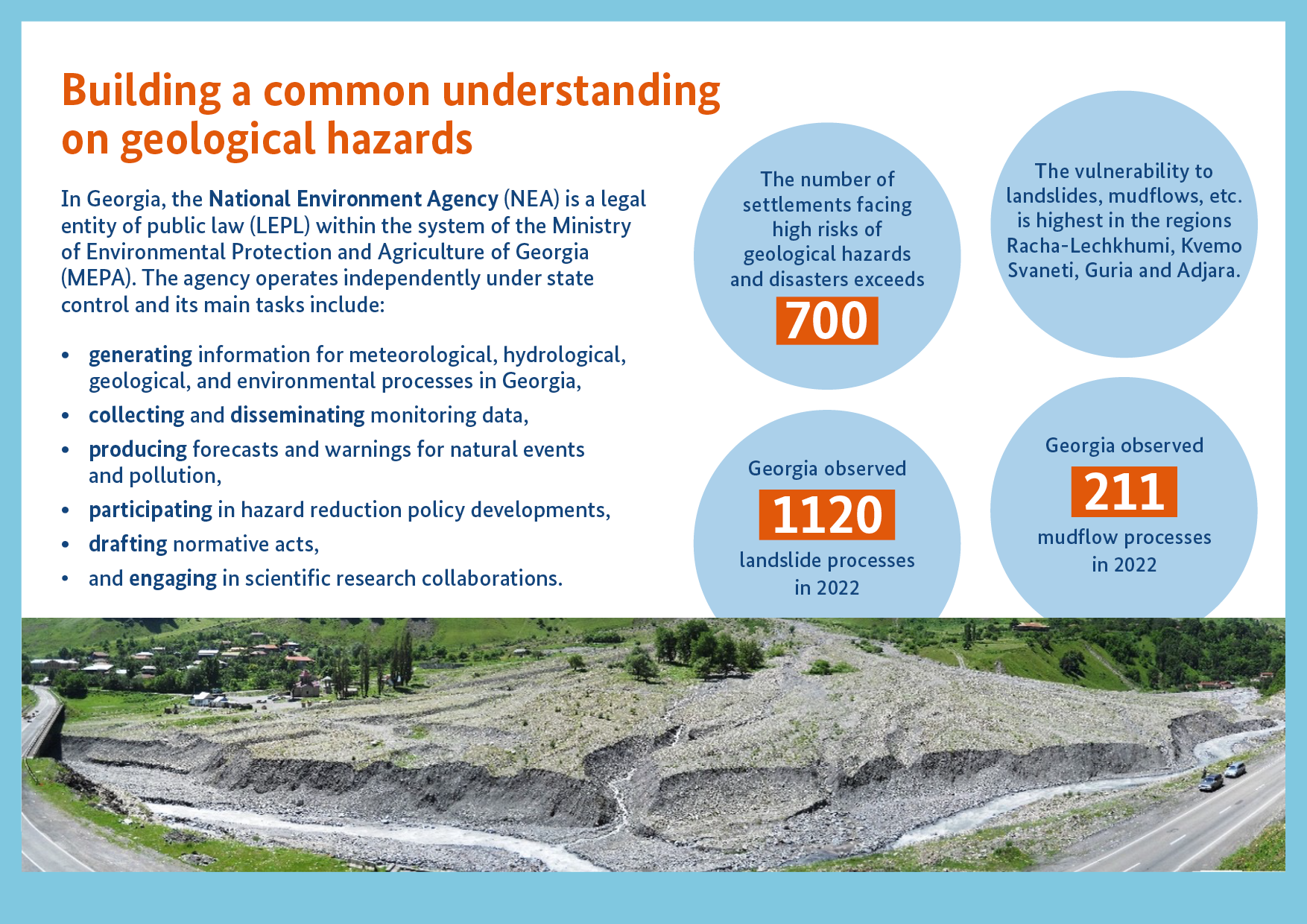
Georgia More than 70% of Georgia’s landscape is mountainous with steep slopes, valleys, and diversity of terrain. This combination makes it prone to geological and hydro-meteorological hazards like floods, landslides, mudflows, rock falls, avalanches, heavy rains and winds. Landslides are a very common hazard in Georgia, which are not only affecting people directly, but also continue to damage infrastructure such as roads, water and electricity lines resulting in interruptions of services for the affected communities. GIDRM worked with various partners in Georgia to advance a comprehensive understanding of risks and, especially, the interlinkages between infrastructure and landslide hazards. Fields of action to promote RID Identifying the emergence of new risks at an early stage Intensifying cooperation of state and non- state actors Establishing risk management as a cross- cutting task Strengthening risk manage- ment capabilities Expanding disaster and crisis monitoring systems 32
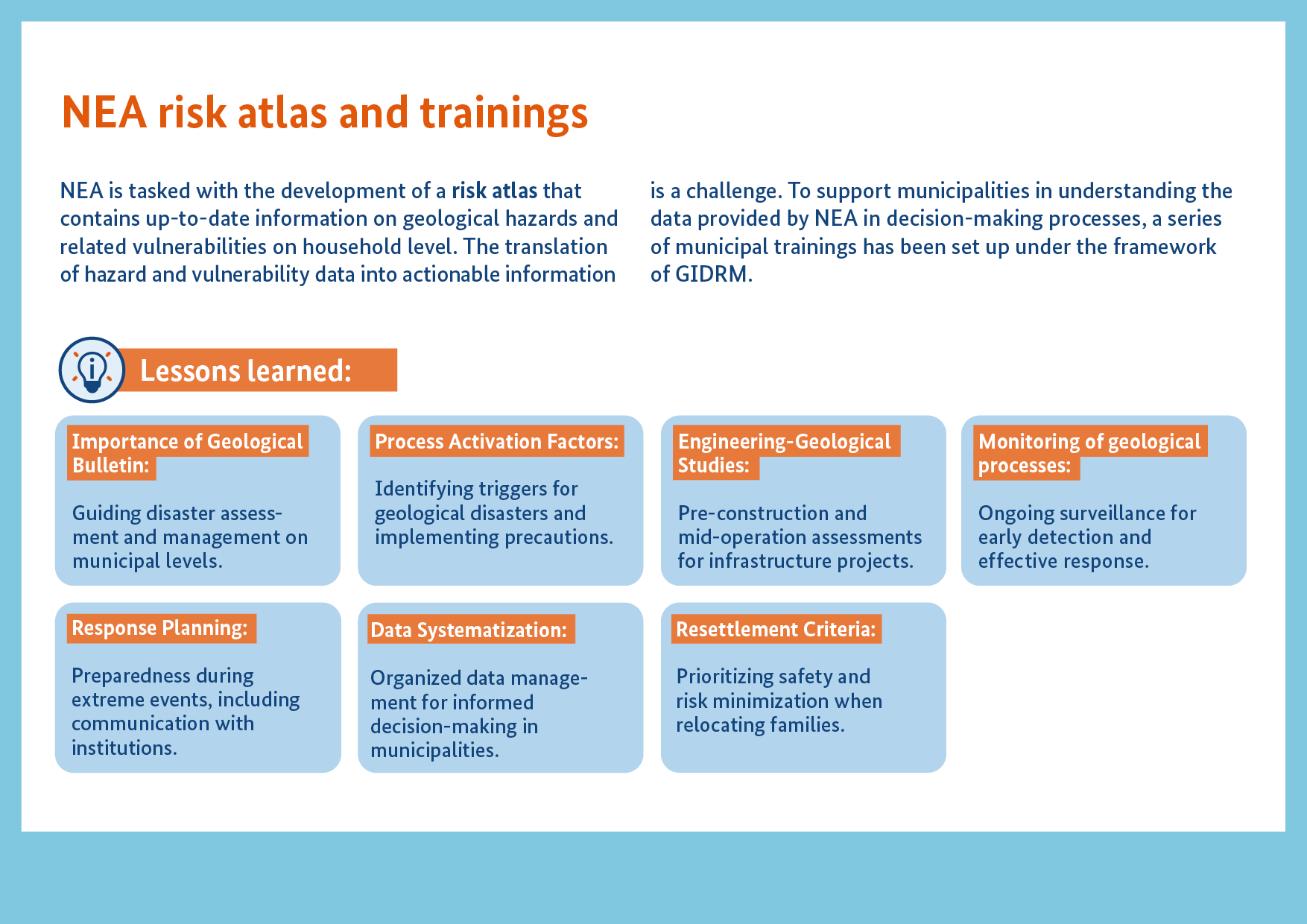
Activities in Georgia for Risk-Informed Development Development of common understanding understanding of the current institutional setting, strategies and visions through contributing in research activities and attending RID workshops. Key stakeholders developed a common Strengthening capacities and risk assessment The capacities of local and national repre- sentatives have been strengthened through a series of workshops on resilient infrastructure. In cooperation with the Climate Risk Institute (CRI), a risk assessment of road infrastructure in the in Racha-Lechkhumi and Kvemo Svaneti , based on the PIEVC protocol, was conducted. Municipal trainings on analysing studies A common understanding of risk is key to ensure risk-informed decision-making. In order to ensure that communities fully understand risk information provided by the responsible government entities such as National Environmental Agency (NEA), municipal trainings on analysing datasets and technical studies (MTA-DS) took place. Technical resources and monitoring sytem Technical resources such as geological field equipment have been provided to NEA and universities to ensure that human resources for promoting RID in Georgia can be trained long-term. In addition, NEA was supported in installing a landslide monitoring system in Gveso, Tsageri. Cross-sector, inter-agency collaboration Cross-sector, inter-agency collaboration and multi stakeholder approaches were facilitated. Joint rockfall modelling exercises with international expertise and the participation of a Georgian delegation at the PIEVC Global Forum 2023 in Vancouver are just two examples of expertise coming together. Workshops and video on understanding risks RID is also about challenging existing perceptions of risk. To broaden their understanding of systemic risks, partners were invi- ted to workshops and introduced to new methods such as the PIEVC and the impact chain analysis. Furthermore, a video on a common understanding of risk was developed. FOCUS: Capacity building & improved planning POSTER DOWNLOAD 33
Lesotho Water is Lesotho’s principal natural resource, vital for a wide range of sectors and critical infrastructure services, such as energy, agriculture, and economic production (i.e., textile industry). Critical water infrastructure, such as the Metolong dam, plays a crucial role in increasing access to water, improving the reliability of water supply and therefore, in supporting economic growth. Lesotho is expected to enter a period of water stress by 2030. Erratic weather patterns and drought, unsustainable land-use methods, and increased water demand due to a growing population, put a toll to the country’s water resources and negatively impact the functioning of critical water infrastructure such as the Metolong dam. It is therefore crucial to understand how to make critical water infrastruc- ture more resilient, to ensure water supply in the long term and enable sustainable development. Fields of action to promote RID FOCUS: Assesment of climate and disaster risks in the water sector using the PIEVC protocol Water Resource- managment Transnational cooperation More information on the PIEVC protocol here. 34
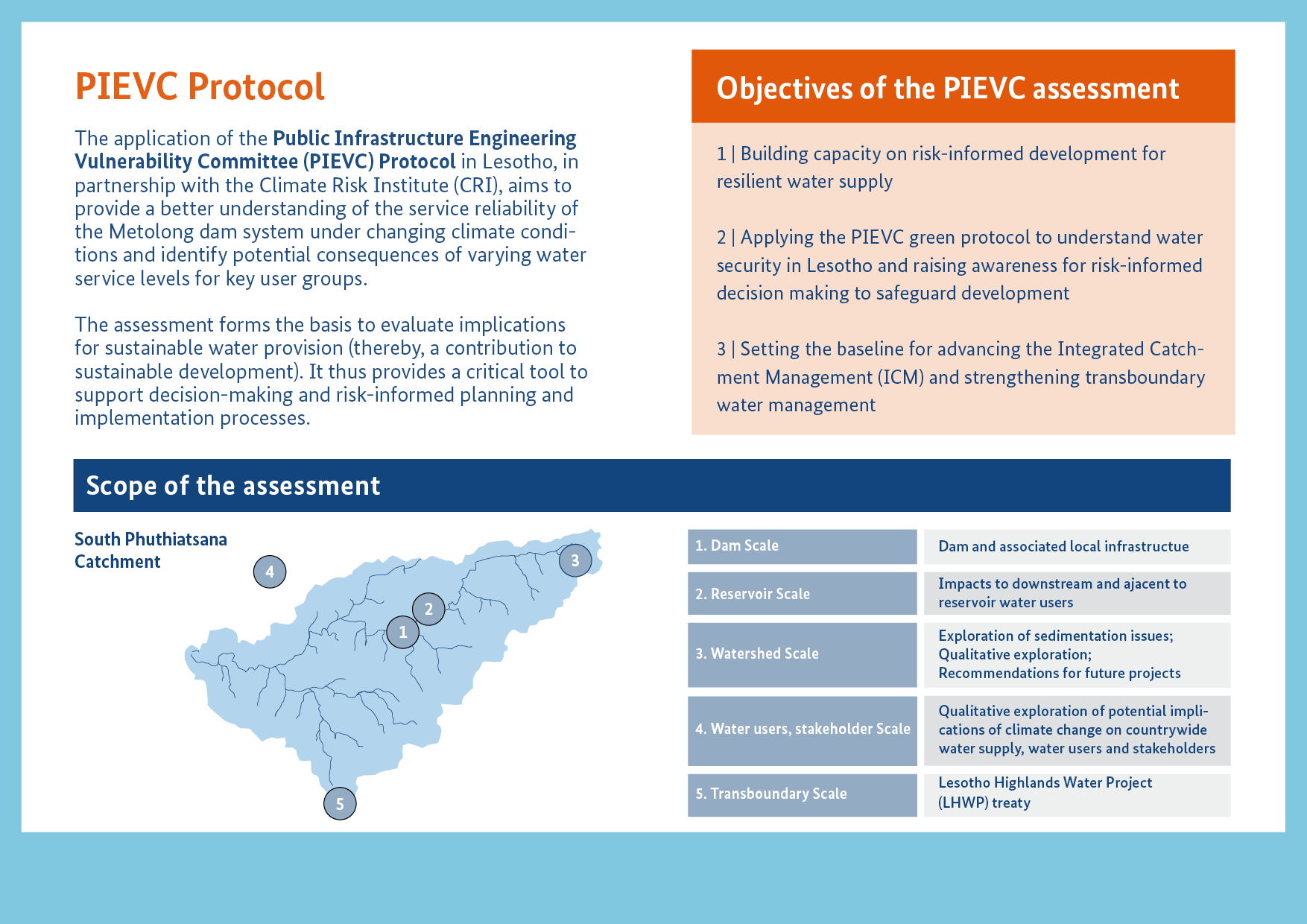
Activities from Lesotho for Risk-Informed Action Policy and Regulation People, Culture and Environment Based on the climate and disaster vulnerability The project used an ecosystem-based approach to assessment of the Metolong dam and the better embed the infrastructure assessment in a more understanding of systemic risks to the water sector in comprehensive understanding of the environment, Lesotho, two national level policy documents have incl. the watershed, the catchment, the reservoir, and been reviewed and the inclusion of risk considerations the neighboring communities with their agricultural has been promoted. Both the Lesotho Water Act as and land use practices. Community counselors took well as the National Strategic Development Plan are part in the PIEVC assessment process to highlight the now risk-informed. community perspective on vulnerabilities regarding water supply. Organisational Arrangements Water resource management requires a multi-stake- holder approach and often concerns more than one country. To support organisational arrangements at the transboundary level, the results of the PIEVC assessment were also brought to the regional river basin commission – ORASECOM. The goal is to advocate through the river basin commission for risk-informed development activities in the water sector. Knowledge and Information Partnership and Collaboration The PIEVC climate and disaster risk assessment was available information has been shared across different conducted through a participatory approach, which entities. Through this process, capacities for risk-in- considered the perspectives of a variety of actors such formed decision-making beyond the Metolong dam as decision-makers, local communities, practitioners, infrastructure have been strengthened. infrastructure operators and government representa- tives. Through the process, partnerships have been A highlight was the site visits from SADC delegates, formed on identified synergies that will continue to especially the DRR Unit, to understand the implica- exist after the assessment process. The knowledge of tions of the PIEVC assessment and RID approach for all involved stakeholders has been increased and other SADC member states. POSTER DOWNLOAD 35
Besides climate change and an associated influx of flooding and landslides, environmental degradation, unplanned urban development, and informal settlements are driving risks in Colombia. 36
Risk-informed development | Why it matters. 37
In Georgia, over 70% of the landscape is mountainous making landslides and rockfall common risks. 38
3. Key messages on RID 1 2 3 4 5 6 7 Focussing on Future development pathways Understanding The complexity of risks Transforming to Risk-informed development Building capacities for An enabling environment Fostering participation and Adressing inequalities Continuous adaptation for Sustainable growth RID decision-making for Sustainable development 40
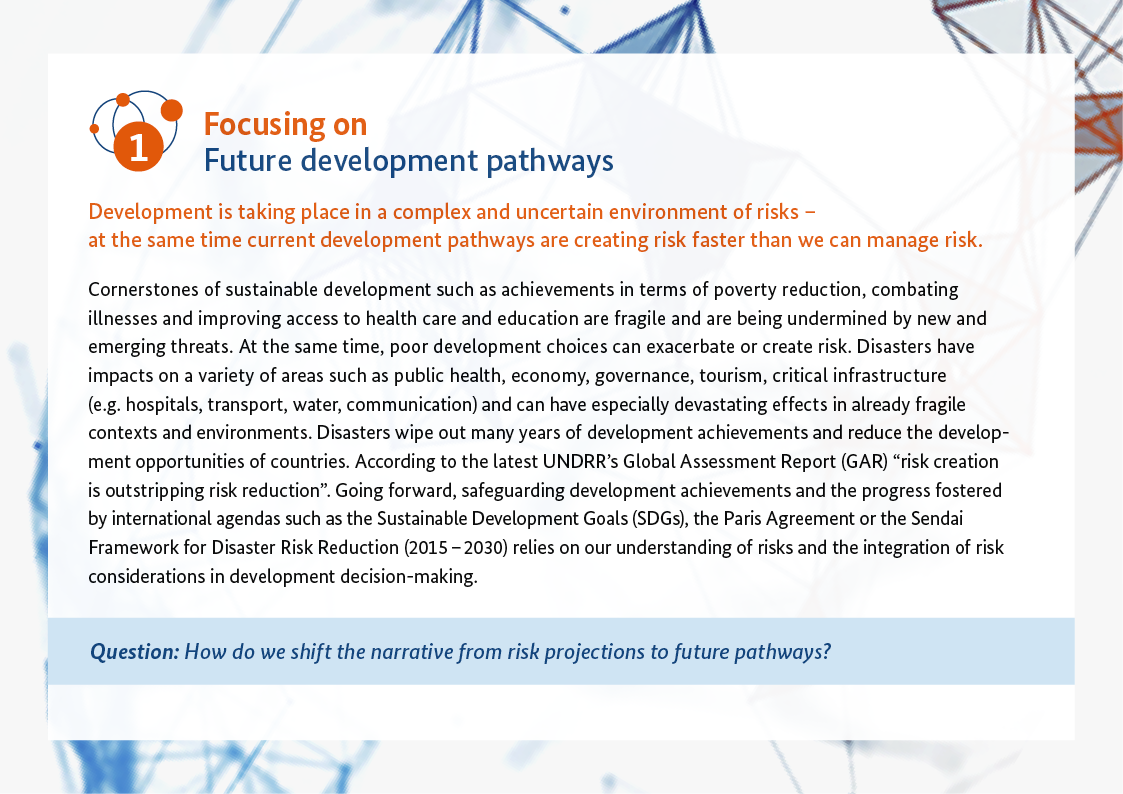
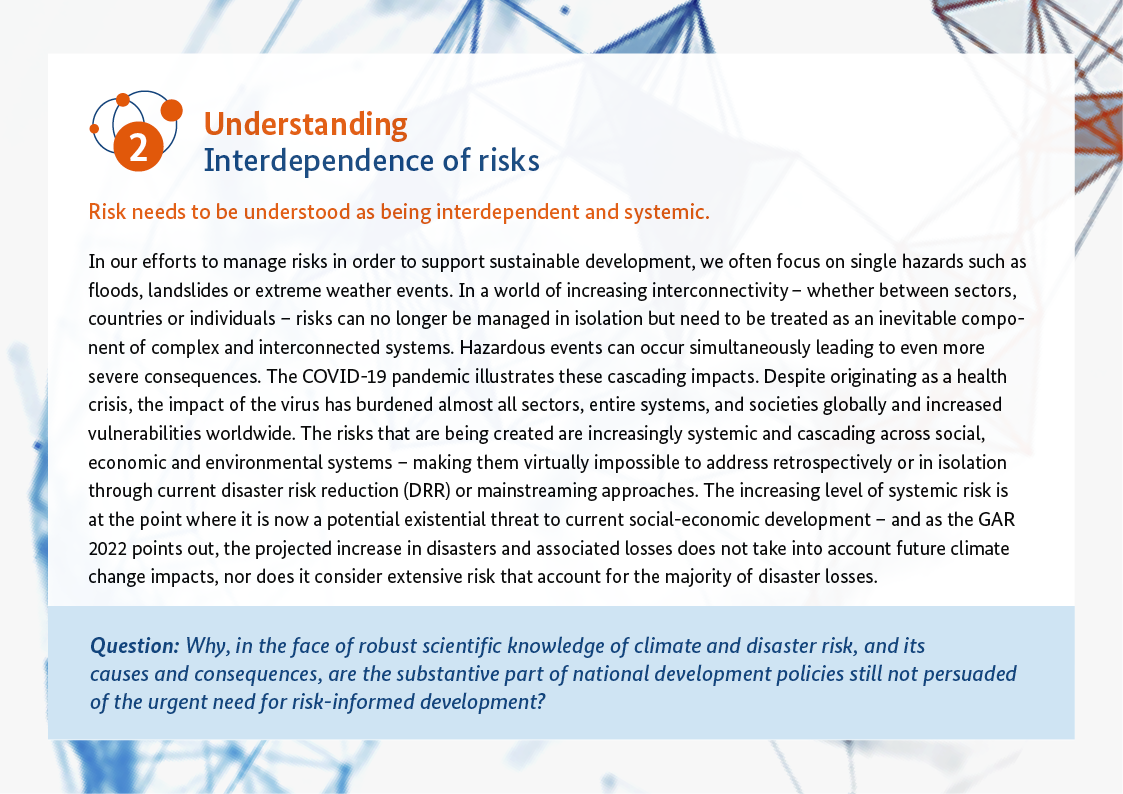
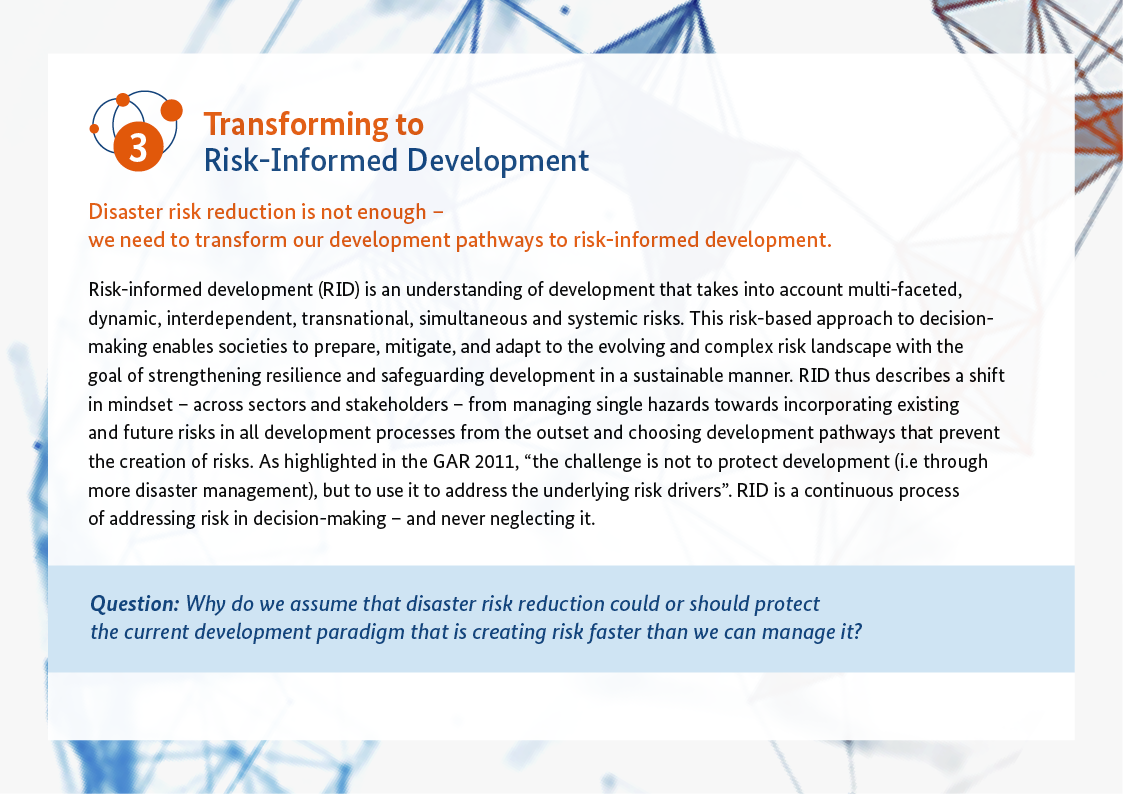
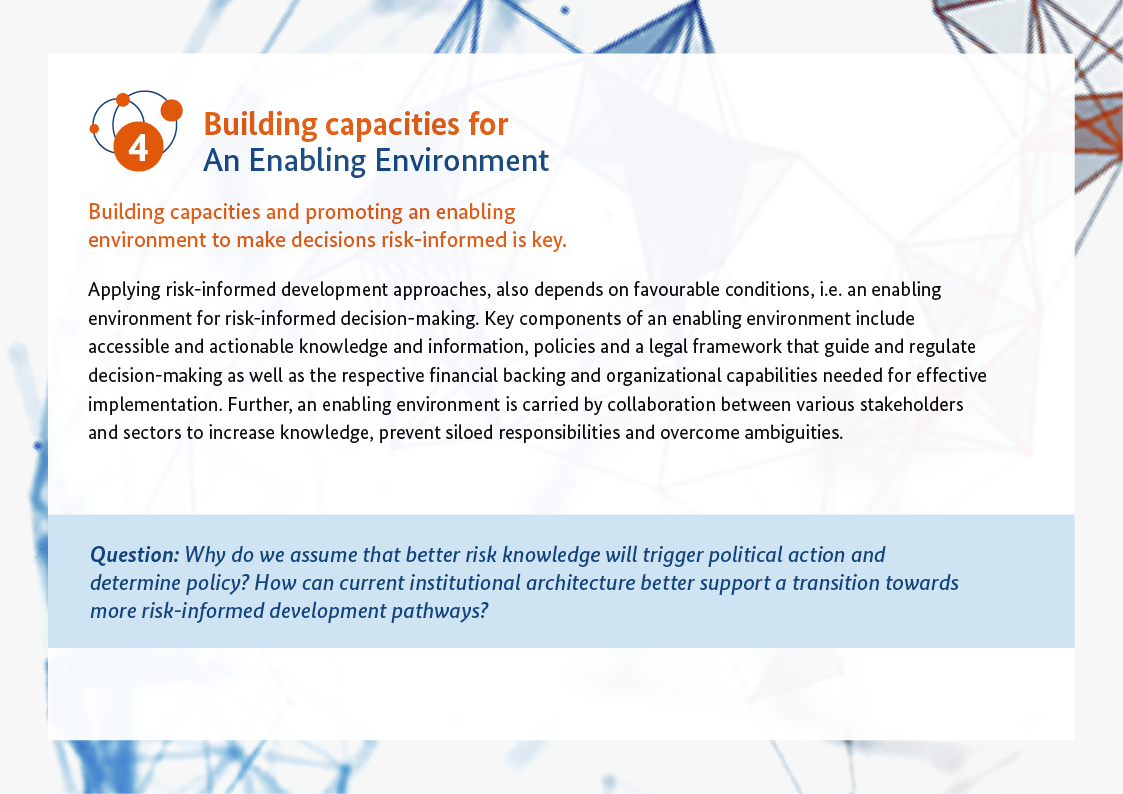
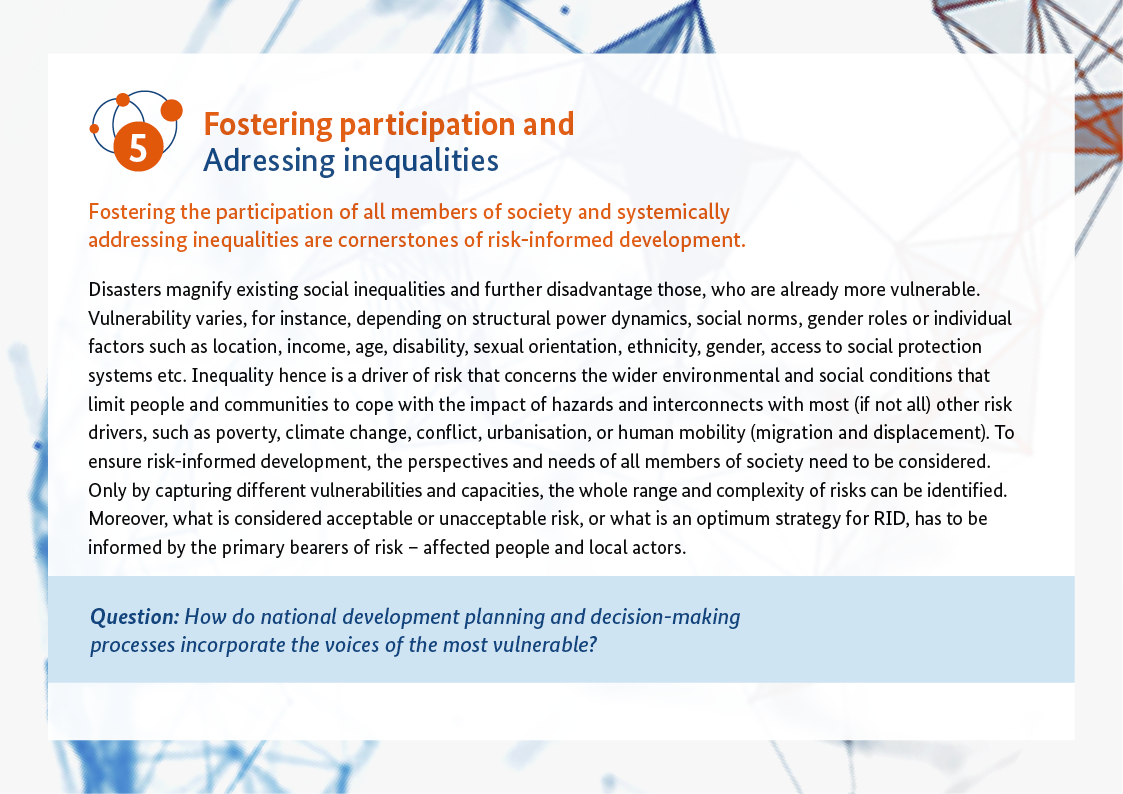
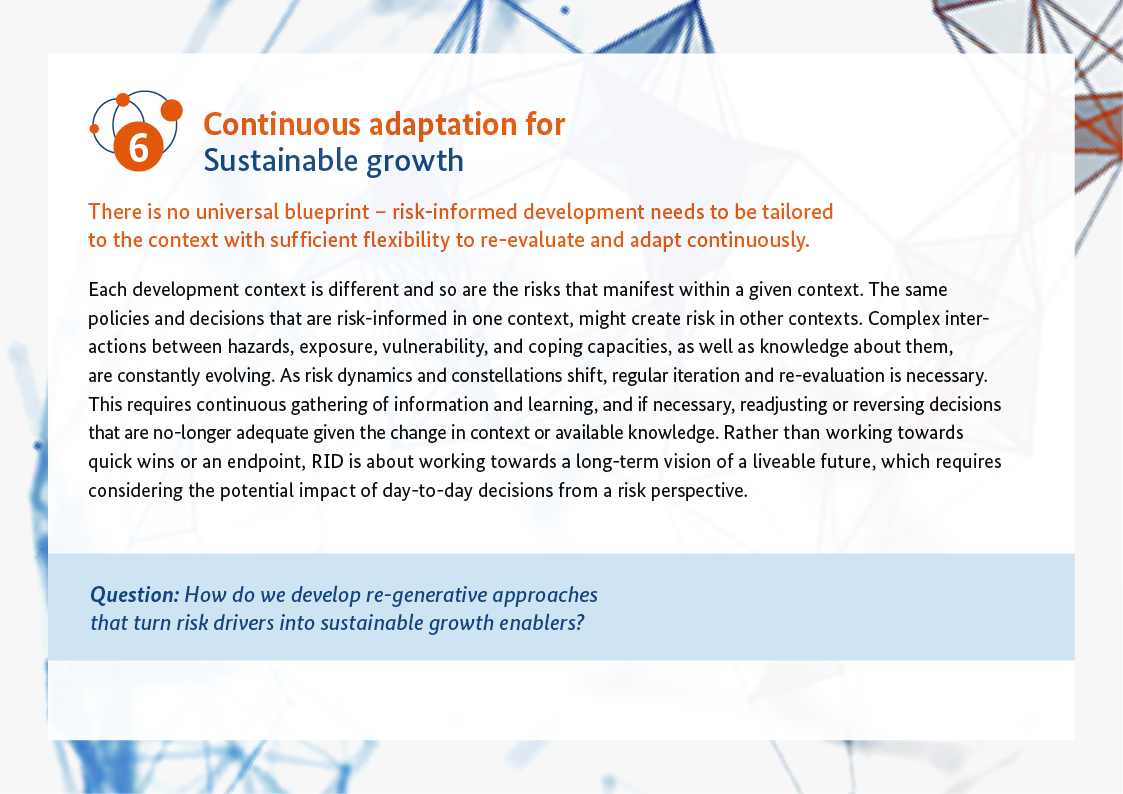
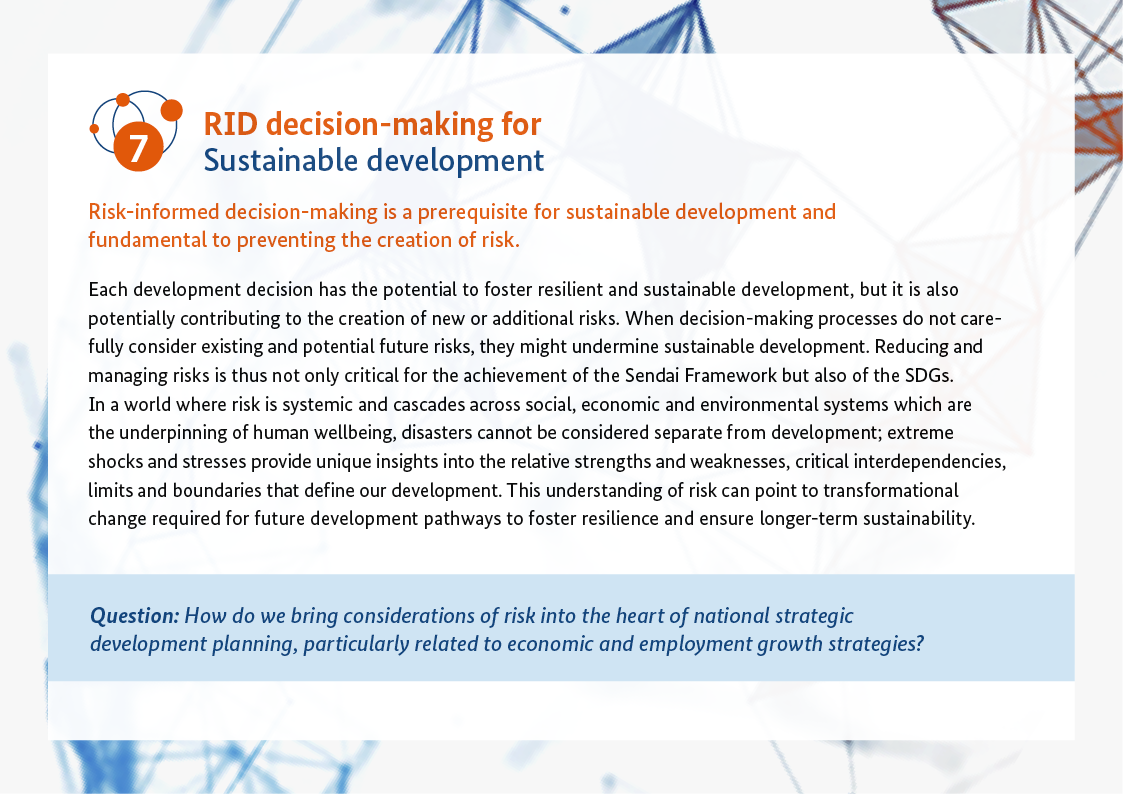
Risk-informed development | Why it matters. Development takes place in an environment of risks – while current development pathways create risks faster than we can manage them. Risk needs to be understood as being interconnected and systemic. Disaster risk reduction is not enough – we need to transform our development pathways to risk-informed development. Building capacities and promoting an enabling environment to make decisions risk-informed is key. Fostering the participation of all members of society and systemically addressing inequalities are cornerstones of risk-informed development. There is no universal blueprint – risk-informed develop- ment needs to be tailored to the context with sufficient flexibility to re-evaluate and adapt continuously. Risk-informed decision-making is a prerequisite for sustainable development and fundamental to preventing the creation of risk. 41
In cooperation with partners worldwide, this publication has been developed by the Global Initiative on Disaster Risk Management (GIDRM), a project commissioned by the German Federal Ministry for Economic Cooperation and Development (BMZ) and implemented by the Deutsche Gesellschaft für Internationale Zusammenarbeit (GIZ) GmbH. Imprint Deutsche Gesellschaft für Internationale Zusammenarbeit (GIZ) GmbH Registered offices Bonn and Eschborn Friedrich-Ebert-Allee 36 + 40 53113 Bonn, Germany T +49 228 44 60-0 F +49 228 44 60-17 66 Dag-Hammarskjöld-Weg 1–5 65760 Eschborn, Germany T +49 61 96 79-0 F +49 61 96 79-11 15 E info@giz.de I www.giz.de On behalf of Federal Ministry for Economic Cooperation and Development (BMZ) Division G23 – Peace and Security Stresemannstraße 94 10963 Berlin, Germany T +49 (0)30 18 535-0 E poststelle@bmz.bund.de I www.bmz.de Project description: Global Initiative on Disaster Risk Management (GIDRM) Design: EYES-OPEN, Berlin Photo and graphic credits: Title: royyimzy/shutterstock.com; p. 2: © Salty View/ adobe.stock.com; p. 5: Artistdesign.13/shutterstock.com; p. 6: © Mario Troiani/ adobe.stock.com; p. 10: © BPawesome/adobe.stock.com; p. 13: © Fezekile Futhwa/adobe.stock.com; p. 22: © LeonardoCortina/adobe.stock.com; p. 32: © GIZ; p. 32: © GIZ; p. 33: © GIZ; p. 33: © GIZ; p. 34: © GIZ; p. 35: © GIZ; p. 36: © Justin/ adobe.stock.com; p. 38: © DimaBerlin/ shutterstock.com November 2023